Tarot Card Meanings: Read Symbols in Context
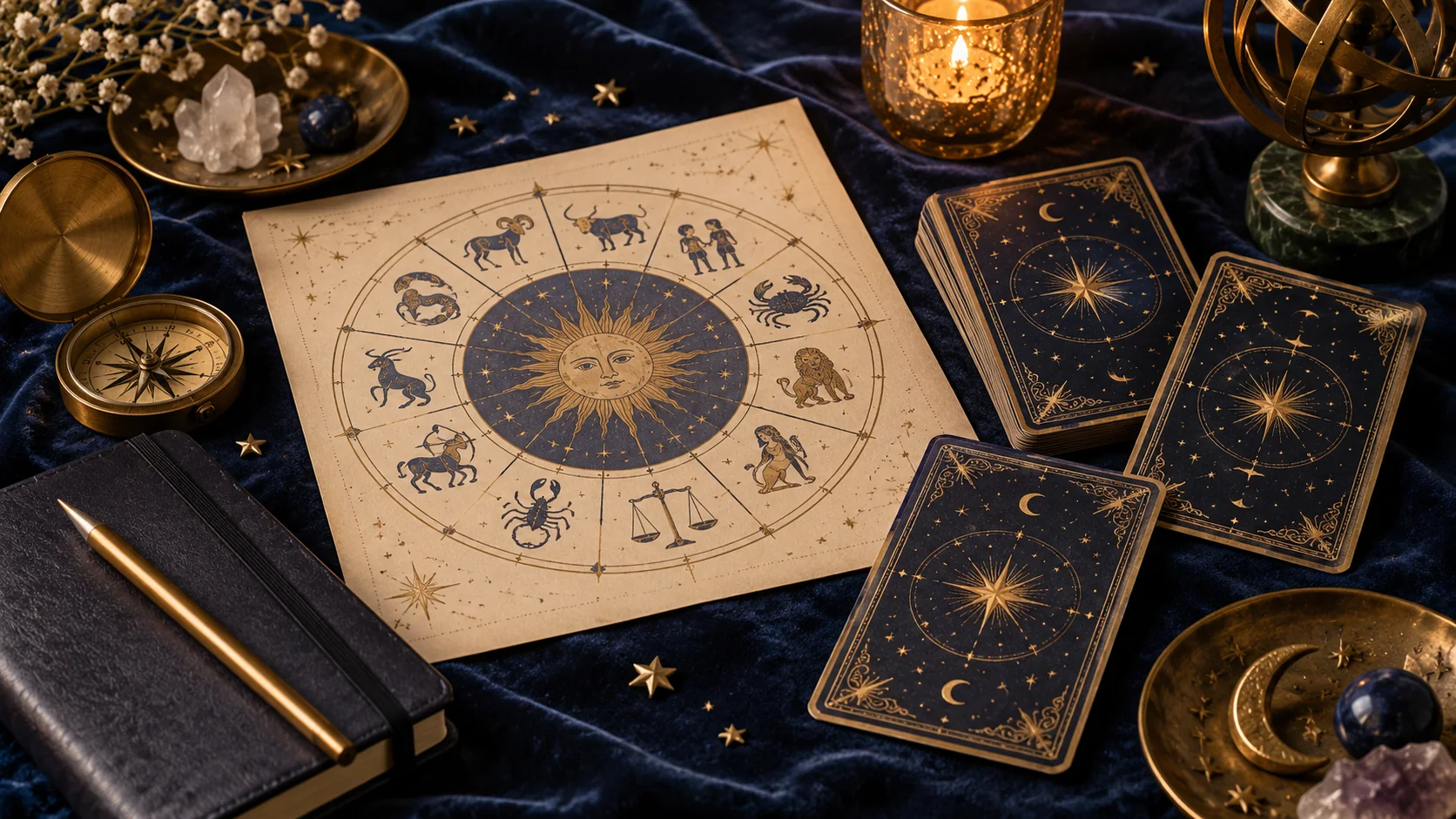
Learn how major arcana, suits, numbers, and court cards work together in a contextual tarot interpretation.
A meaning is a starting point for interpretation
Tarot card meanings are a vocabulary of associations developed through different decks and reading traditions. A keyword such as change or patience gives you a starting point, but it does not explain an entire situation. The question, spread position, artwork, and surrounding cards influence how a reader interprets a card. This guide introduces common Western tarot language and links to suit guides. It does not provide a personalized reading or claim that cards establish future events or another person’s thoughts.
Understand the structure of a common deck
A common 78-card tarot deck contains 22 major arcana cards and 56 minor arcana cards. The minor arcana has four suits, usually called Wands, Cups, Swords, and Pentacles, with ten numbered cards and four court cards in each. Decks can change names, artwork, numbering, and sometimes structure, so check the guide supplied with yours. The major arcana often addresses broad experiences or turning points in interpretation; the minor arcana often provides a more everyday vocabulary. Neither group automatically carries a stronger factual prediction.
Use suits and numbers without making them rigid
Wands commonly relates to initiative and creative energy; Cups to feelings and connection; Swords to thought and communication; Pentacles to practical resources and material life. Aces often introduce a possibility, while later numbers can suggest development, tension, or completion within a suit. These are reading conventions, not a formula that produces one answer. Compare the scene on your own card with the keyword. A detail that does not fit your situation can be left as a question instead of being forced into a dramatic explanation.
Read court cards and reversals with care
Pages, Knights, Queens, and Kings can represent approaches, roles, qualities, or people in a reading. A court card is not proof of a person’s gender, appearance, age, or identity. Likewise, a reversed card does not have to mean the opposite of its upright meaning. Some readers interpret it as a theme being delayed, internalized, strained, or overlooked; others do not use reversals. Choose a convention before the session and record it. This makes the interpretation easier to review and less likely to shift toward whatever answer you want.
Move from a symbol to a useful question
For each draw, write three lines: what you notice in the image, which traditional association seems relevant, and what you can investigate or do next. If a card suggests conflict, ask which conversation needs clarification. If it suggests rest, consider where your schedule allows recovery. Avoid turning ominous imagery into a prediction of disaster. Medical, legal, financial, and safety decisions need appropriate evidence and advice. A careful tarot practice can leave you with a thoughtful prompt while keeping the difference between imagination and knowledge clear.