Major Arcana: Reading the Twenty-Two Tarot Cards in Context
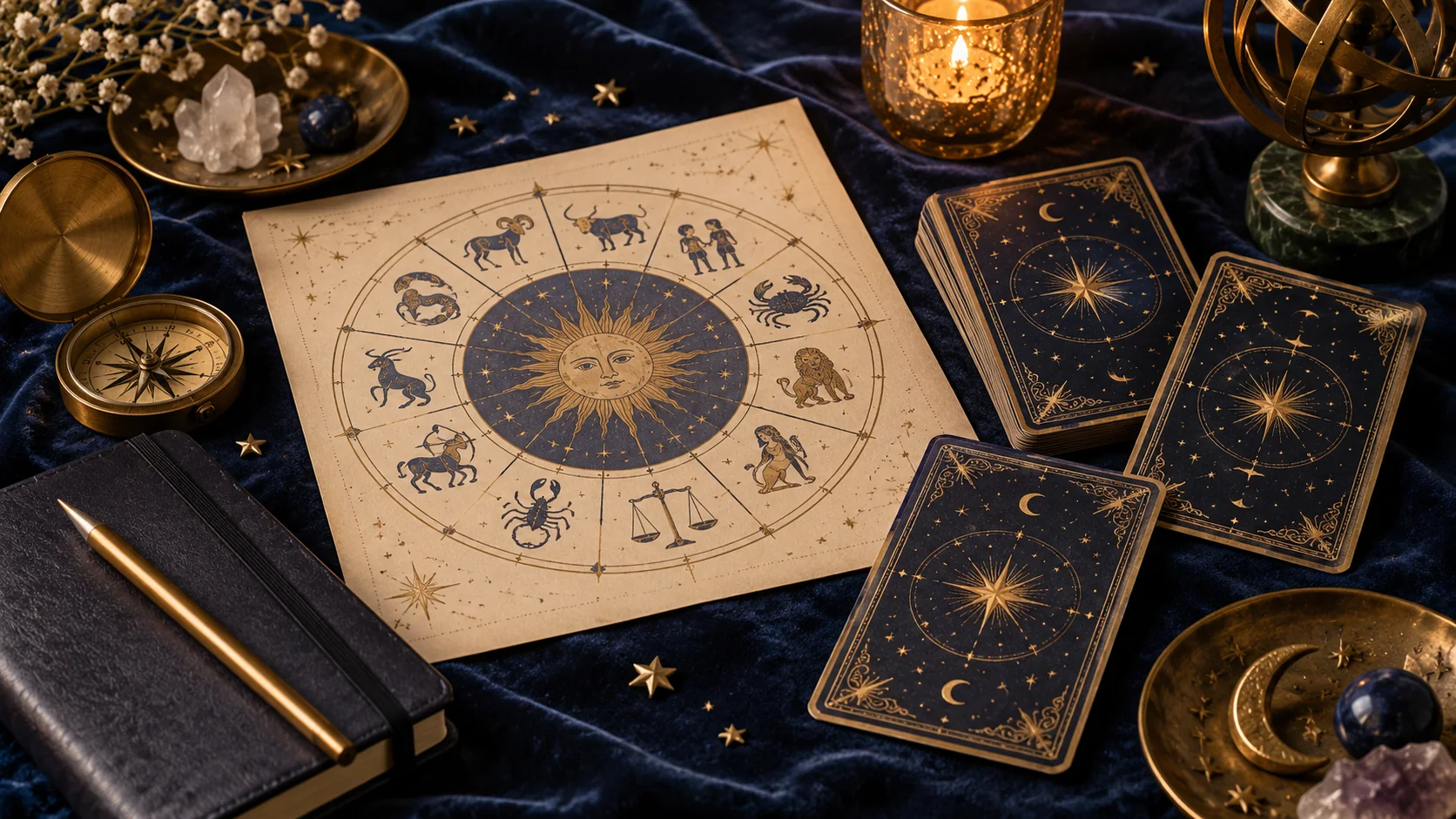
Learn the Major Arcana sequence as a set of symbolic themes, without treating a dramatic card as a fixed prediction.
What the Major Arcana includes
Many familiar tarot decks have twenty-two Major Arcana cards alongside fifty-six Minor Arcana cards. The Major Arcana commonly runs from the Fool through the World, with symbolic figures and scenes that invite broader reflection. Names, numbering, and imagery vary between decks. Some traditions place Strength and Justice in a different order. Use the reference for your own deck before assuming that a number or picture has one universal meaning.
Learn the sequence as a story
A common learning approach follows the Fool through encounters with initiative, authority, relationships, change, and completion. The Magician can prompt questions about available resources; the High Priestess about what remains unspoken; the Empress about care or creation; and the Emperor about structure. The Hierophant, Lovers, and Chariot introduce further themes of convention, choice, and direction. These examples are starting points for interpretation. They do not tell you that a specific person will appear or that one life path is destined.
Give difficult images room for interpretation
The Hanged Man may invite a change of perspective; Death a discussion of endings; the Devil a question about constraint; and the Tower an examination of disruption. Such cards can feel alarming, but an image is not evidence that a death, disaster, betrayal, or curse will occur. Describe the visual details and the spread position before making an interpretation. If an account turns a frightening card into pressure to buy protection or repeated readings, step back from that claim.
Context matters more than a memorized keyword
The same card can be read differently in a position about resources, obstacles, or a possible response. State the question first, then connect the card to that position. If you use reversed cards, decide how you will interpret reversals before drawing rather than changing the rule to produce an attractive result. A guidebook can help you learn the deck’s language, but the interpretation should remain a tentative reflection, especially when it concerns facts you cannot independently observe.
Practice with an ordinary next step
Choose one card and write a neutral description of what is visible. Add one possible theme, one question about your current situation, and one action within your control. For example, a card interpreted as structure might prompt you to clarify a deadline or review a shared agreement. Record what you actually wrote and return to it later without treating a perceived match as proof of predictive accuracy. Learning the cards can be a thoughtful creative practice without requiring certainty about the future.